PCB Assembly Services India — SMT, THT & Mixed PCBA
What Is PCB Assembly (PCBA)?
PCB assembly is the process of soldering electronic components onto a bare printed circuit board to create a functional electronic assembly. The bare PCB — the board itself — becomes a PCBA (Printed Circuit Board Assembly) once components are placed and soldered.
PCBA is the core of almost every electronic product. From automotive control units and industrial automation controllers to IoT modules and defence electronics — every product that uses electronics requires PCB assembly.
There are three primary assembly methods: Surface Mount Technology (SMT), Through-Hole Technology (THT), and mixed assembly combining both. The right method depends on component types, board complexity, application environment, and volume requirements.
VIT provides all three assembly types from a single integrated facility in Bangalore, under one ISO 9001:2015 and IATF 16949:2016 certified quality system.
PCB Assembly Types at VIT
Surface Mount Technology (SMT) Assembly
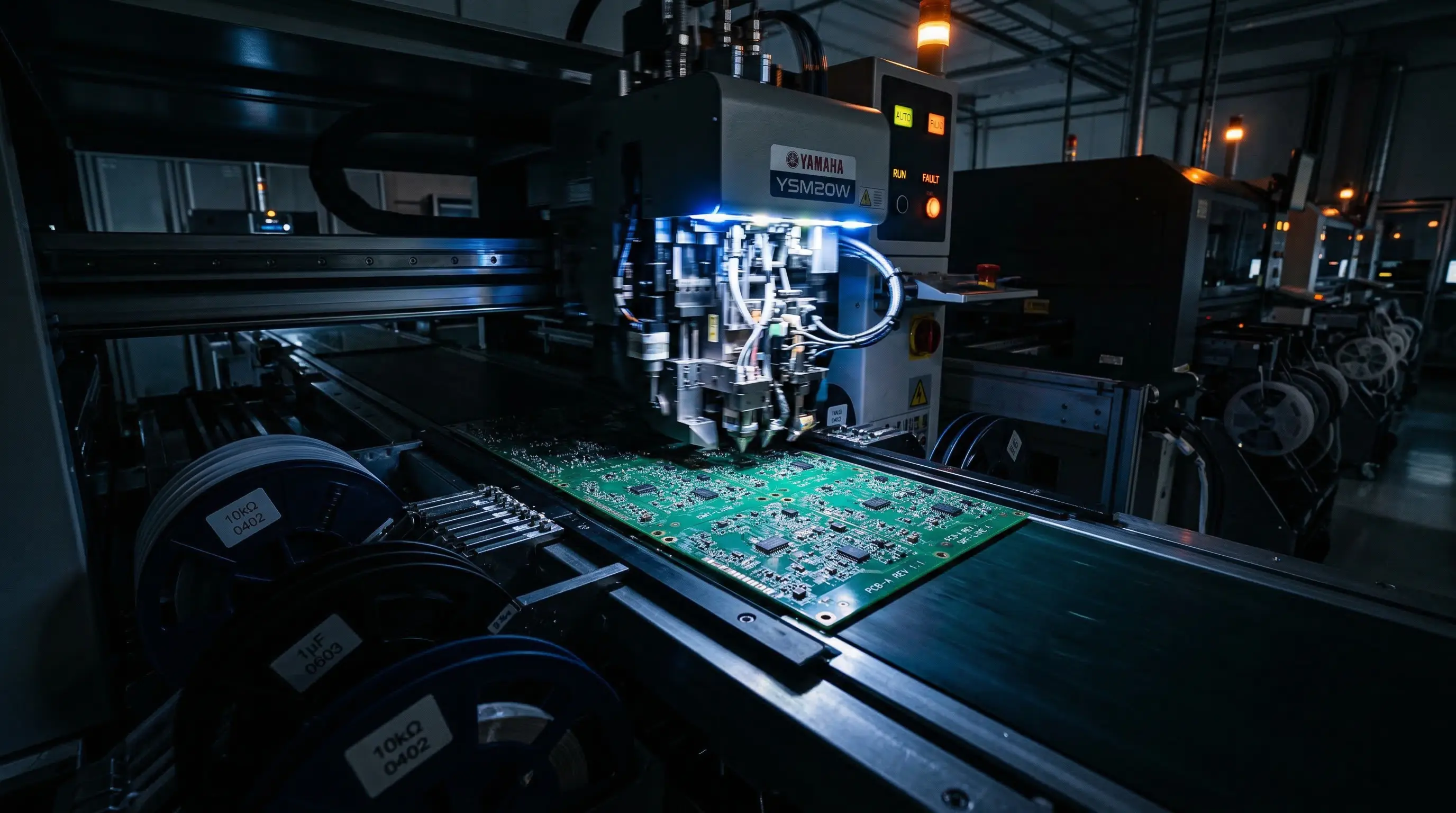
SMT is the dominant assembly method for modern electronics. Components are placed directly onto the surface of the PCB and soldered in a reflow oven. VIT operates three Siemens SMT lines with a combined capacity of 206,700 CPH. Component capability covers 0201 passives, 0.3mm fine pitch QFPs, BGAs, LGAs, and CSPs. Every line has dedicated AOI post-reflow. Capable of handling up to 16-layer PCBs.
Explore SMT assembly services →Through-Hole Technology (THT) Assembly
THT involves inserting component leads through holes drilled in the PCB and soldering on the opposite side. Despite SMT’s dominance, THT remains essential for components that require mechanical strength — connectors, transformers, large capacitors, and components subject to mechanical stress. VIT’s wave soldering line handles 6,000 boards per day (100mm length). Manual THT stuffing is available for complex or low-volume assemblies.
Mixed Assembly (SMT + THT)
Most real-world PCBAs require both SMT and THT components on the same board. VIT handles mixed assembly within a single production flow — SMT first, followed by selective THT and wave soldering — under a unified inspection and quality control process.
PCBA Capability at VIT
SMT Lines — Three Dedicated Siemens Lines
- Siemens HS60 + HF/3 + HF/3 with MTL IC Placer
- Vectronics 9-zone reflow oven
- VI Tech AOI
- 3× Siemens 80S20
- OmniFlo 7 reflow oven
- Honel HV-5000 AOI
- Siemens 80S20 + 80F4 IC Placer
- Omniexcel 7 reflow oven
- BGA Rework Station ZM-R7220A
Component Range
0201 passives through to 0.3mm fine pitch QFP, BGA, LGA, and CSP packages. Through-hole components of all standard sizes. PCB complexity up to 16 layers.
Reflow
Lead-free Vitronics Soltec 12-zone reflow oven (9 heating zones + 3 cooling zones). Nitrogen atmosphere reflow capability for critical assemblies.
Wave Soldering
6,000 boards per day (100mm length). Foam fluxer. Component lead cutting. Manual THT stuffing available for complex or low-volume assemblies.
Inspection
AOI on all 3 SMT lines post-reflow. X-Ray inspection for BGA and critical components. In-process visual inspection at every stage. Final inspection before dispatch.
Special Processes
Selective conformal coating. Vacuum sealing for MSL components. Tape and reel for module manufacturing. Ultrasonic cleaning where required.
Testing
Functional testing and programming as per customer specification. ICT where applicable. Final inspection before dispatch. Full traceability through ERP-integrated production (since April 2025).
Quality Standards That Govern Every PCBA
Every PCB assembly at VIT is manufactured under a four-certification quality system.
9001:2015
Quality Management System, certified by TÜV Rheinland. Valid until November 2028.
16949:2016
Automotive Quality Management System, certified by TÜV Rheinland. The global standard for automotive electronics manufacturing. Valid until November 2028.
IATF Global Oversight →
14001:2015
Environmental Management System, certified by TÜV NORD. RoHS-aligned manufacturing processes.
45001:2018
Occupational Health & Safety, certified by TÜV NORD.
Process disciplines applied on every assembly: Six Sigma, 5S, SPC, KAIZEN, FMEA, LEAN manufacturing. IPC-certified trainer on-site for soldering skills and QC standards.
Learn More →Industries We Assemble PCBAs For
Automotive & EV
Instrument clusters, EV charging control boards, ADAS electronics, body control modules. IATF 16949:2016 certified.
Learn more →Defence & Aerospace
High-reliability assemblies with full traceability, process documentation, and inspection discipline.
Learn more →Power Infrastructure
Energy meters, inverter control boards, power driver PCBAs, smart grid electronics.
Learn more →IoT & WiFi Modules
High-density, fine-pitch module assemblies with tape and reel capability.
Learn more →Industrial Automation
Control boards, HMI electronics, sensor assemblies, industrial communication modules.
Learn more →Medical Equipment
Process-documented assemblies for medical devices requiring exceptional quality discipline.
Learn more →Why OEMs Choose VIT for PCB Assembly
Three SMT Lines, One Facility
206,700 CPH total capacity across three Siemens lines — with dedicated AOI on every line. Scale from prototype to production without changing supplier.
Automotive-Grade Process on Every Order
IATF 16949:2016 certification applies to all production — not just automotive orders. Every PCBA benefits from the same process discipline.
Dedicated Prototype Line
Fast-turnaround NPI without disrupting production schedules. DFM guidelines provided upfront to reduce design iterations.
Full Mixed Assembly Capability
SMT, THT, and mixed assemblies handled in a single production flow. No subcontracting, no handoffs.
X-Ray and AOI on Every Line
BGA and critical component inspection built into the production flow — not an optional add-on.
ERP-Integrated Production
Real-time material tracking, production scheduling, and traceability since April 2025. Part of a certified EMS company in Bangalore with over a decade of production history.
Our PCB Assembly Process
Every PCB assembly at VIT follows a documented, audit-ready process — from incoming material inspection through to final inspection and dispatch.
Material auditing and incoming quality inspection of all components and bare PCBs. Kitting. PCB baking to remove moisture prior to assembly.
- Incoming quality inspection of all components
- Kitting and PCB baking prior to assembly
Automated solder paste printing with SPI verification. High-speed pick and place across three Siemens lines. Fine pitch placement down to 0201, BGA, QFP, LGA, and CSP packages. Pre-reflow inspection.
- High-speed pick and place across 3 Siemens lines at 206,700 CPH
- Fine pitch placement down to 0201, BGA, QFP, LGA, and CSP packages
Lead-free reflow soldering. AOI post-reflow on every line. X-Ray inspection for BGA and critical components. Rework where required.
- AOI post-reflow on every line
- X-Ray inspection for BGA and critical components
Through-hole component preparation and manual stuffing where required. Wave soldering at 6,000 boards per day. Visual inspection and touch-up. Ultrasonic cleaning where specified.
- Wave soldering at 6,000 boards per day
- Visual inspection and touch-up at every fail point
- Ultrasonic cleaning where specified
Functional testing and programming per customer specification. Conformal coating where specified. Final inspection. Packaging and dispatch.
- Final inspection and conformal coating where specified
- Packaging, logistics, and dispatch
Frequently Asked Questions
Ready to Discuss Your PCB Assembly Requirements?
Whether you need prototype PCBA, volume production, or a certified manufacturing partner for automotive or defence electronics — VIT has the lines, certifications, and process discipline to deliver.